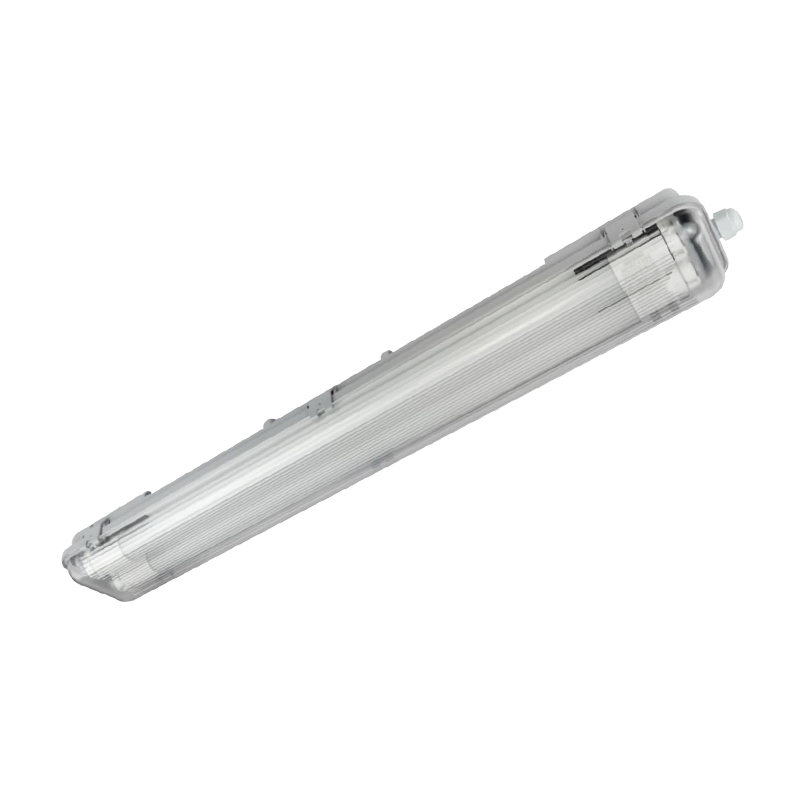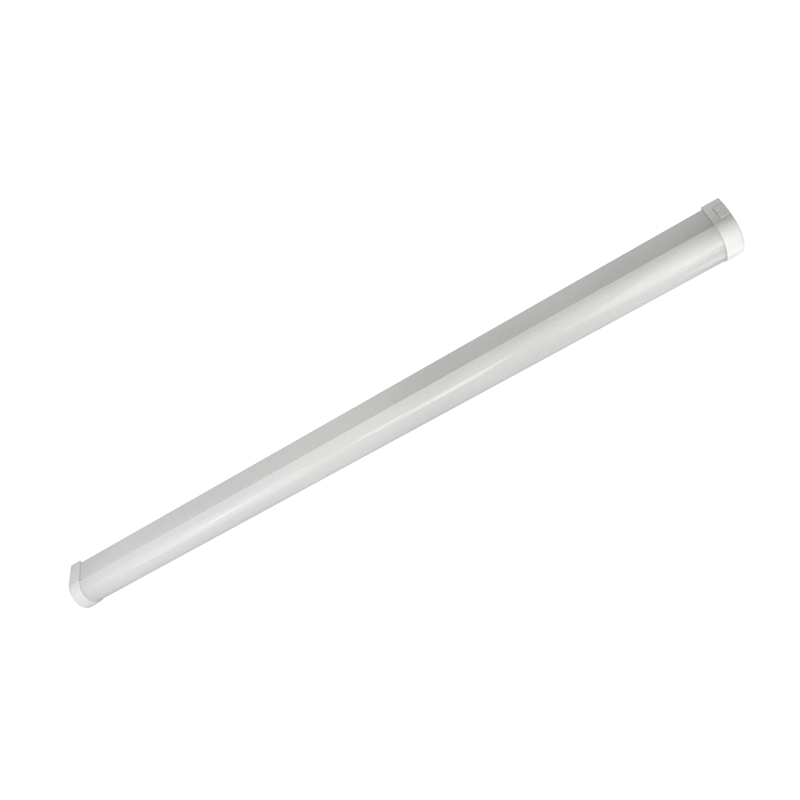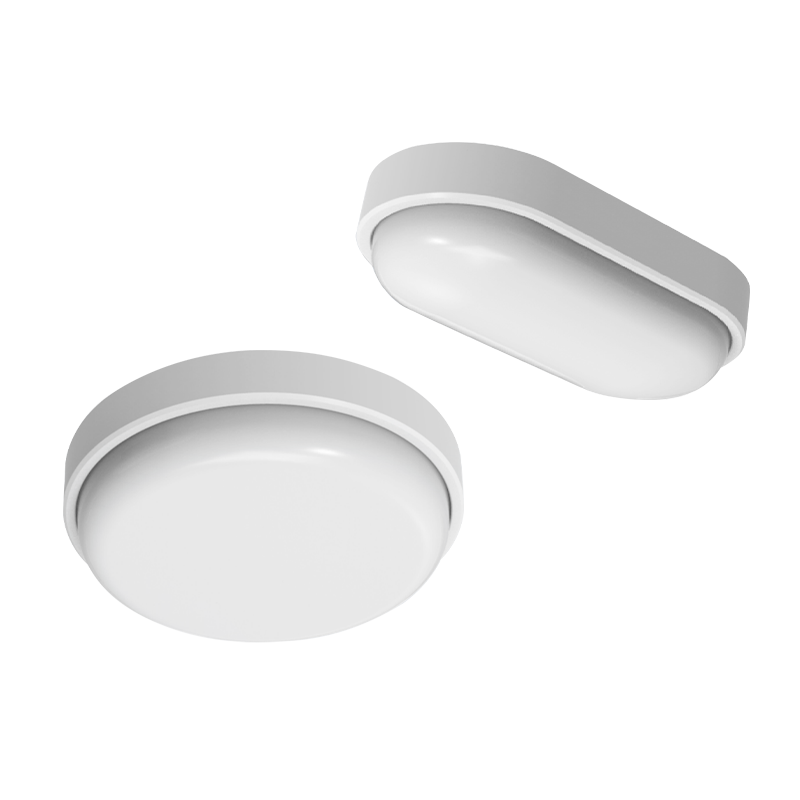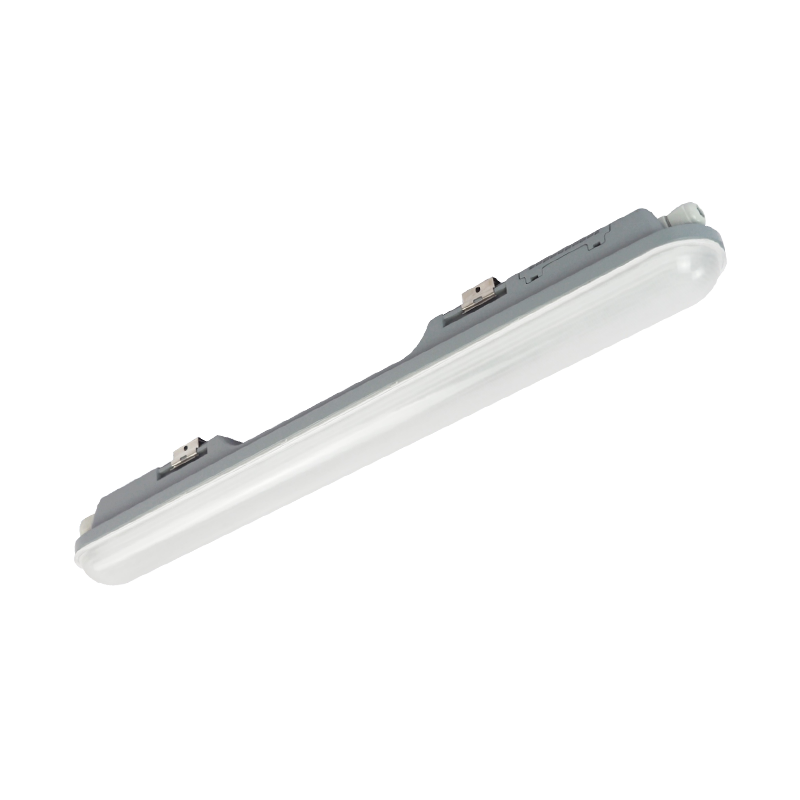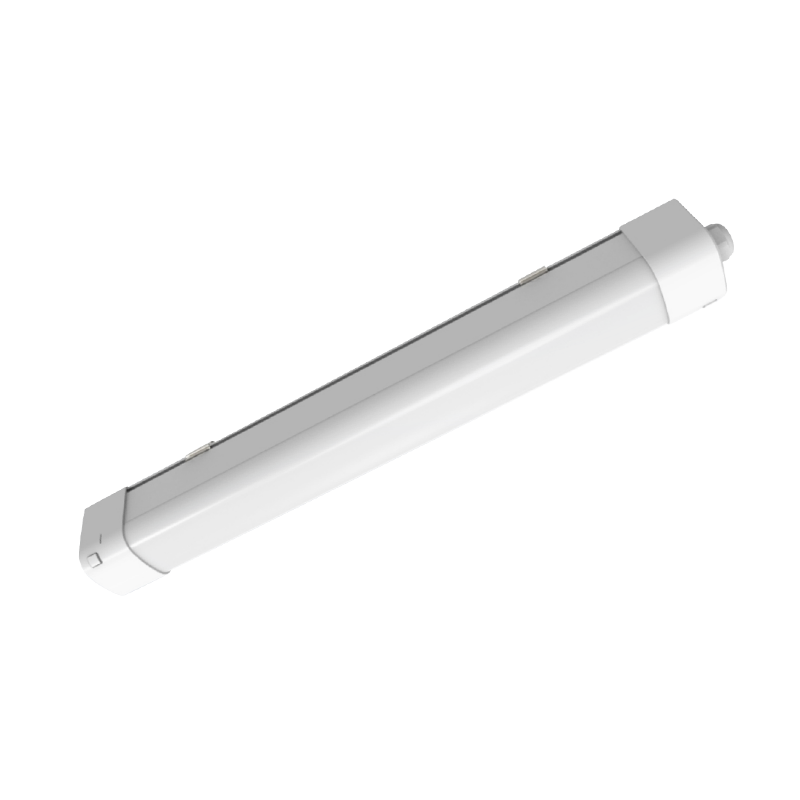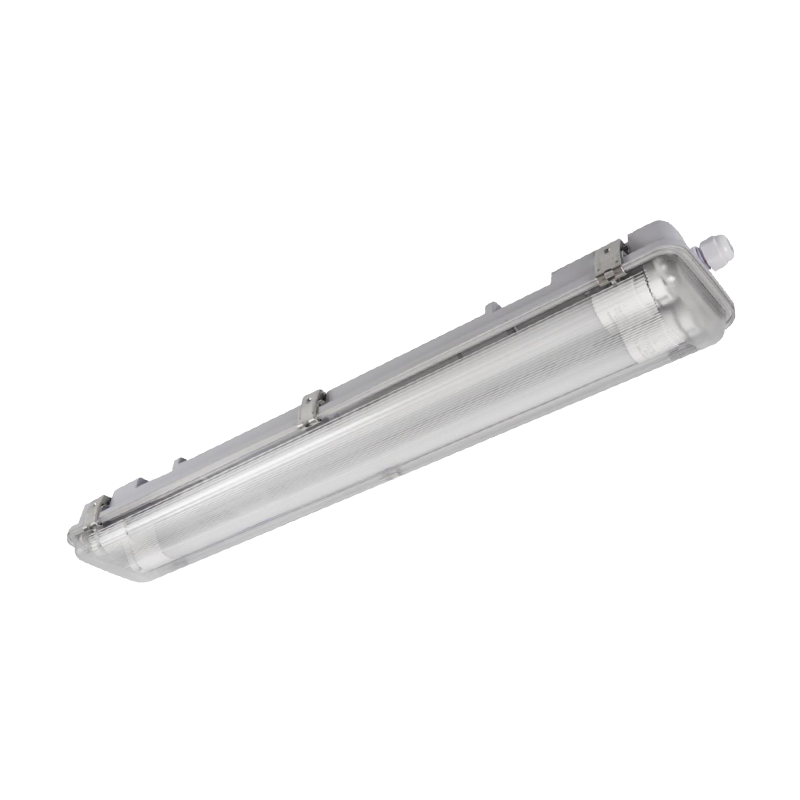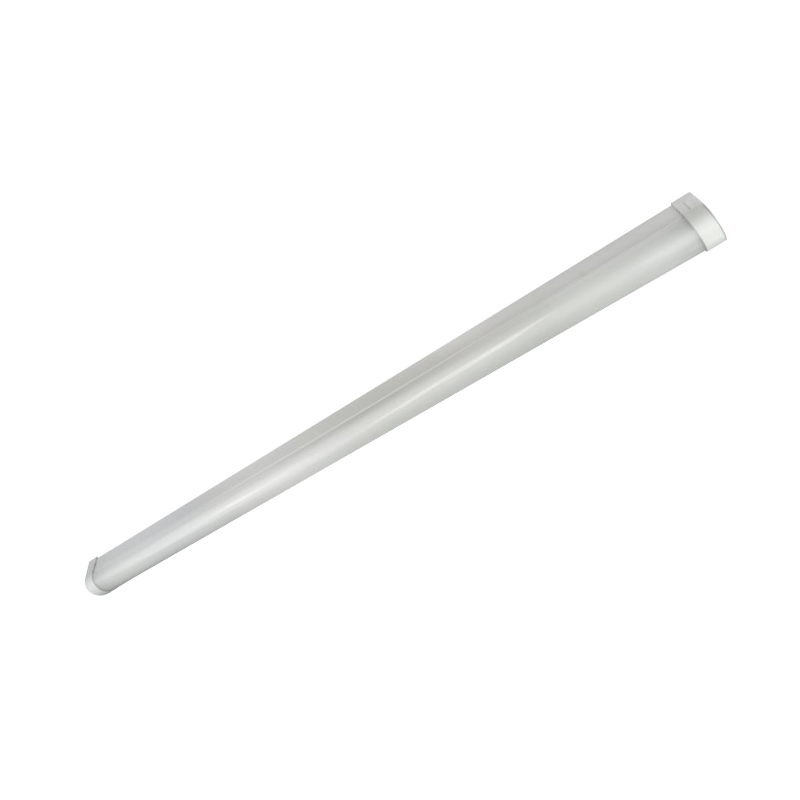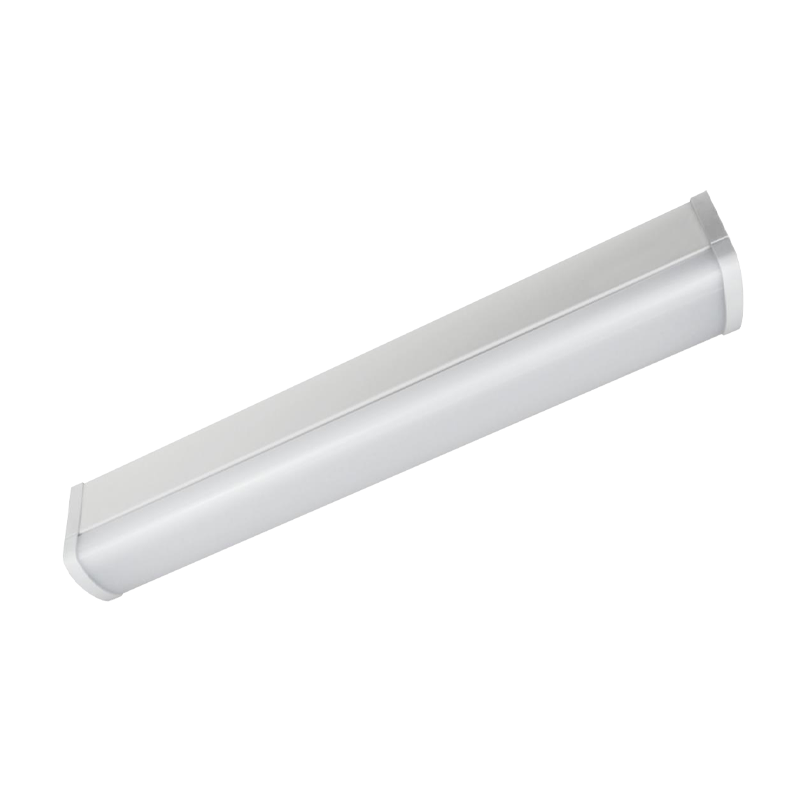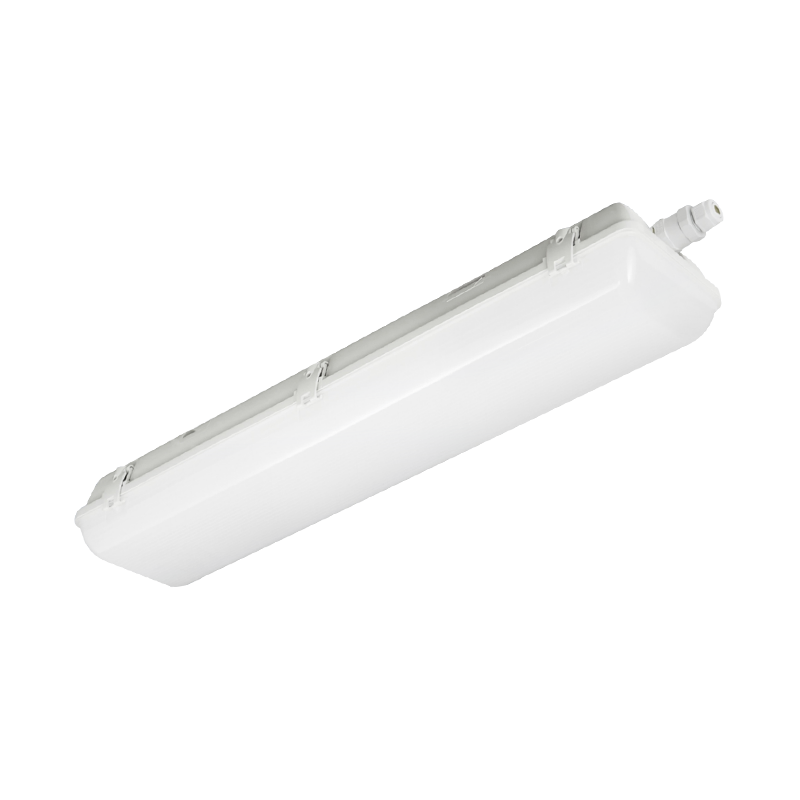


“Tri-proof” is a factory-side product family name, not a safety standard. Manufacturers in China, Taiwan and parts of Europe use it for fixtures engineered around three protections: water ingress, dust ingress and corrosion of the housing. No IEC, EN or UL document contains the phrase. Behind the marketing name sits an IP code, a housing material, a gasket system and a test report.
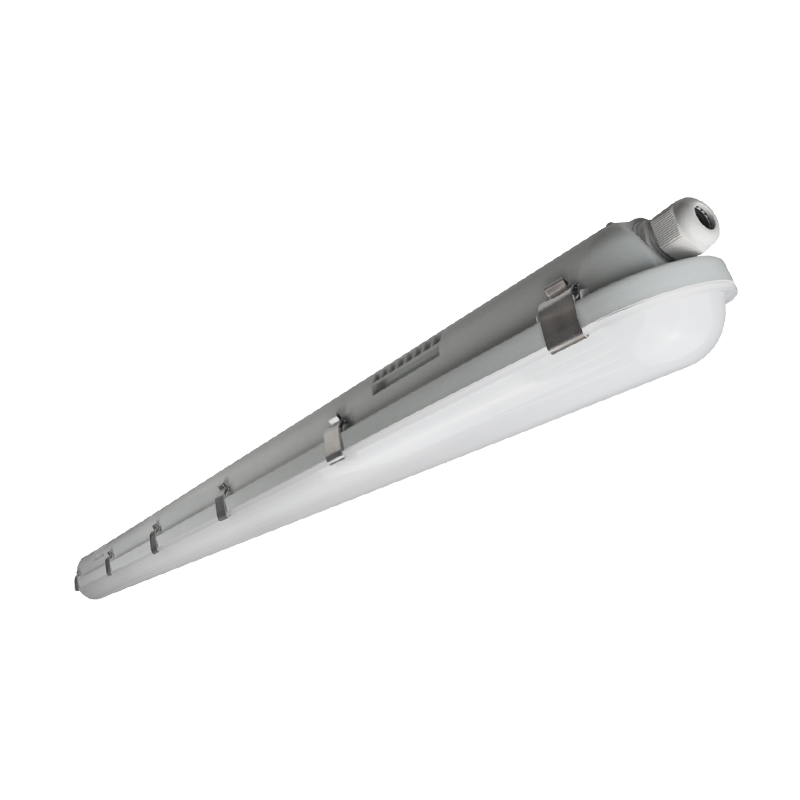
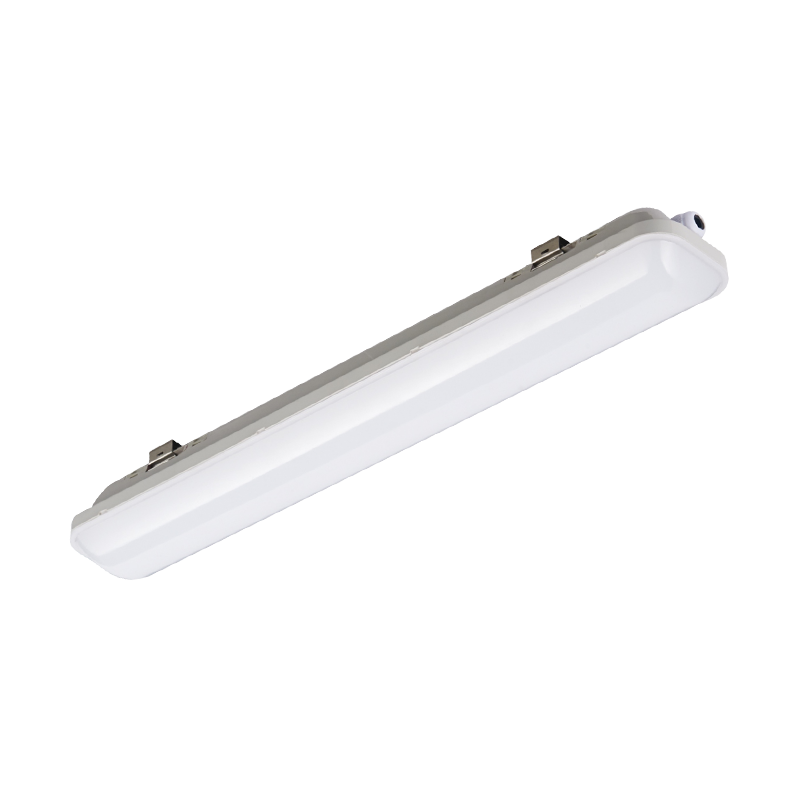
The typical LED tri-proof light is a sealed linear fixture. A polycarbonate or extruded aluminium body carries the LED board; a polycarbonate diffuser clips over the top; silicone or EPDM gaskets sit in a machined groove at both end caps and along the diffuser edge; stainless steel or UV-stable nylon clips compress the gasket at fixed intervals. IP65 is the working baseline, IP66 is common on newer tooling, and a smaller number of models reach IP67 or IP69K.
Two build types dominate the category. The integrated fixture houses LED module, driver and diffuser in one sealed body — the LG06 and LG08 families follow this pattern, and specific models use an aluminium-alloy body with a 120° beam angle for aisles and low-bay mounting. The tube version keeps a T8-shaped LED lamp inside a sealed polycarbonate sleeve, so a maintenance team can replace the light source without discarding the housing.
Where the term stops being useful is at the border. A factory can print “tri-proof” on a carton for a fitting that has only been tested to IP44, because no authority polices the word. What cannot be invented is the IP number on the file, the gasket material in the bill of materials, or the corrosion hours in the salt-spray report.
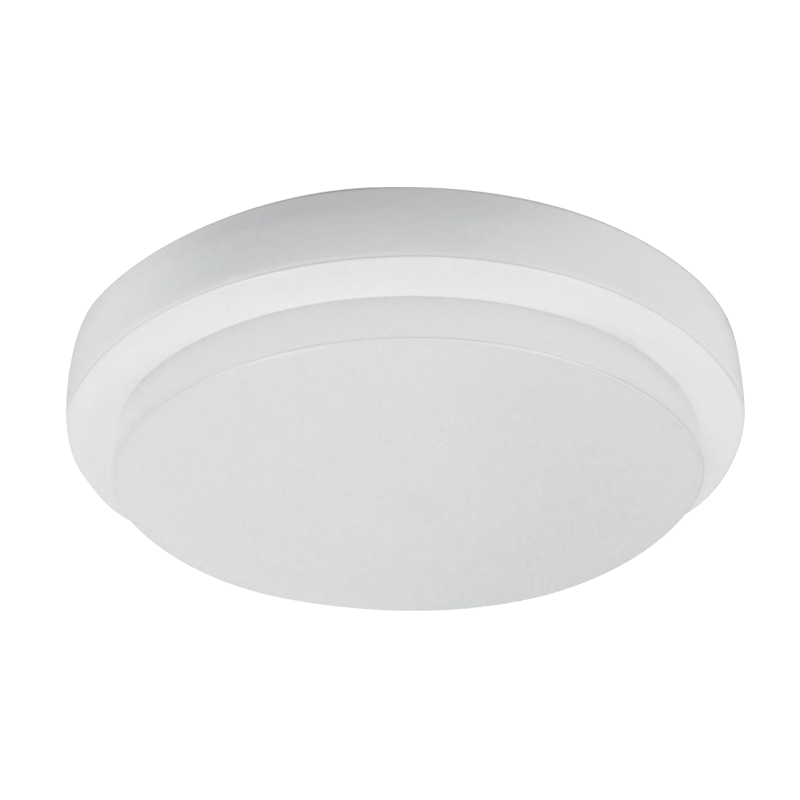
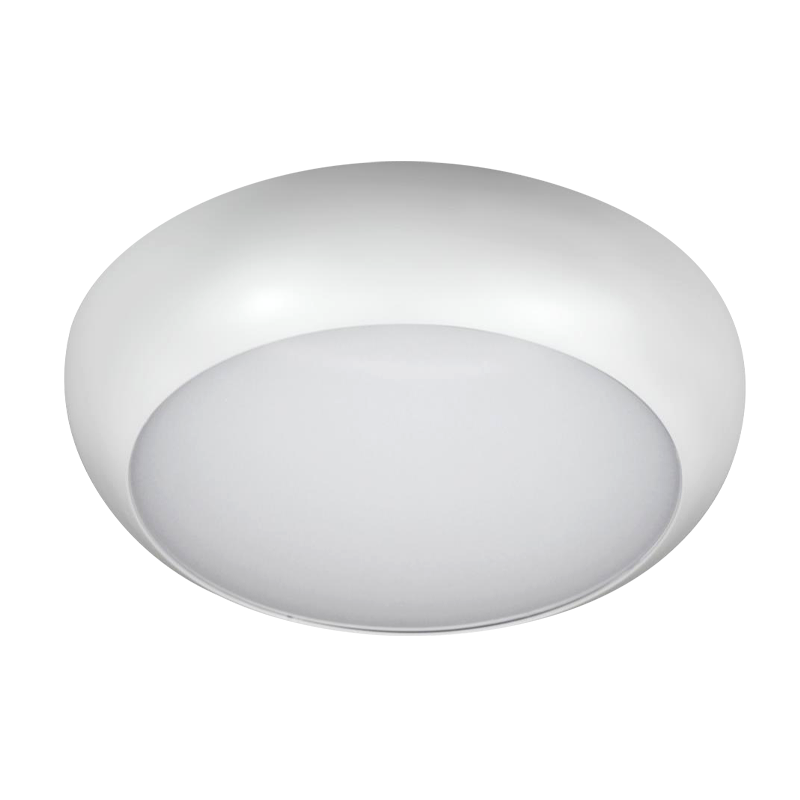
 LG06J Aluminum Alloy LED Tri-Proof LightIP65-rated tri-proof fixture with 120° beam and slim body; PCB-on-cover design supports easier installation and light source replacement.View Product →
“Vapor tight” is the North American term, and it comes from a different starting point: the wet-location classification inside UL 1598 and its Canadian equivalent. A fixture earns the description because it has been evaluated as a sealed enclosure where moisture cannot reach live parts, not because a catalogue page says so.
The construction reflects that history. Most vapor-tight fixtures use a fiberglass-reinforced polyester or heavy polycarbonate housing, a thick polycarbonate lens, a one-piece foamed gasket rather than a set of separate seals, and stainless steel or non-metallic latches designed to be opened with a screwdriver during relamping. Many models carry a pressure-equalisation vent so that internal air expands and contracts without pulling moisture past the gasket.
The North American lines built for this market — the LG21 vapor-tight series being one example — usually combine IP66 sealing with a corrosion-resistant enclosure and a tool-free latch, because the fixture is expected to be opened, cleaned and closed again hundreds of times over its service life.
 LG21A Vapor-Tight LED Fixture with Metal Locking ClipsIP66-sealed vapor-tight luminaire with metal locking clips, multi-power models and wet-location suitability for washdown or dusty areas.View Product →
Strip away the marketing and the overlap is large: both describe a sealed linear or bulkhead luminaire intended for wet, dusty or washdown areas. The divergence sits in terminology, certification route, latch design and the way each market writes a specification. A buyer comparing quotations from a Chinese factory and a North American brand is often comparing the same physical idea recorded in two different languages of compliance.
| Comparison point | LED tri-proof light | Vapor-tight fixture |
|---|---|---|
| Origin of the name | Manufacturer product-family label used across Asia and parts of Europe | North American trade term tied to wet-location evaluation |
| Governing documents | IEC 60529 for IP, IEC 62262 for impact, EN 60598 for luminaire safety | UL 1598 / CSA C22.2, NEMA 4X enclosure practice, NSF/ANSI 2 for food areas |
| Typical IP range | IP65 as standard, IP66 common, IP67 and IP69K on selected models | IP65 to IP66 typical, IP67 on washdown variants |
| Housing material | Polycarbonate, extruded aluminium, sometimes coated steel | Fiberglass-reinforced polyester, heavy polycarbonate, stainless steel on premium units |
| Access method | End caps and clips, often requiring tools | Tool-free or screwdriver latches along the lens edge |
| Common installation | Suspended, surface-mounted, chain-hung, trunking-mounted | Surface, pendant, chain-hung, sometimes recessed into a washdown ceiling grid |
| Typical sites | Factories, warehouses, car parks, tunnels, workshops, farm buildings | Food plants, cold stores, car washes, bottling lines, parking structures |
The practical consequence is simple. A tri-proof light with a genuine IP66 report will perform in a food plant. A vapor-tight fixture with an NSF listing will satisfy a sanitation auditor in a way that a tri-proof light without that listing never will, even if the sealing is identical. Certification, not vocabulary, decides which document the inspector accepts.
Both families live or die by the second digit of the IP code. The first digit covers solids and dust; the second covers water. Buyers tend to focus on the first and ignore the second, which is usually the one that causes failures in service.
| IP rating | Dust protection | Water protection | Where it is realistic |
|---|---|---|---|
| IP54 | Dust protected, limited ingress | Splashing water from any direction | Covered workshops, dry warehouses with occasional cleaning |
| IP65 | Dust tight | Water jets from a 6.3 mm nozzle at 12.5 L/min | General industrial bays, car parks, loading docks |
| IP66 | Dust tight | Powerful water jets at higher pressure | Washdown zones, food processing, vehicle bays |
| IP67 | Dust tight | Temporary immersion up to 1 m for 30 minutes | Floors subject to pooling water, cold-store defrost cycles |
| IP69K | Dust tight | High-pressure, high-temperature jet cleaning | Hygienic processing lines with daily steam or jet cleaning |
Relative severity of the water tests behind each rating
Two mistakes repeat in tender documents. The first is treating IP66 as proof of corrosion resistance. Salt spray, lactic acid, cleaning chemicals and ammonia attack the housing and the gasket, not the seal geometry, and an IP test says nothing about any of them. The second is comparing an IP rating on the lamp with an IP rating on the driver. A sealed IP66 housing with an IP20 driver tucked into an unvented cavity will still fail, because the heat has nowhere to go and the driver derates long before the LEDs do.
Silicone holds its memory from roughly -50 °C to +200 °C and resists UV yellowing. EPDM is cheaper and performs well against water and steam but degrades faster in contact with oils and solvents. A foamed one-piece gasket eliminates joint gaps, which is why North American vapor-tight designs favour it. Equally important is compression: a gasket compressed below about 20 % leaks, and one compressed above 40 % takes a permanent set and stops sealing after the third relamping.
Polycarbonate is tough and light but yellows under UV unless the grade is stabilised, and it stress-cracks near screw bosses. Fiberglass-reinforced polyester resists chemicals better and stays dimensionally stable in heat, which matters in bakeries and foundries. Extruded aluminium dissipates heat best and is the right choice for high-wattage linear fittings, but the anodising and the cut end faces must be sealed or corrosion starts at the edges.
A sealed luminaire is not a dry luminaire. Every time the LEDs heat the air inside and the fixture cools overnight, moisture is driven through the gasket unless a breather membrane equalises pressure. Cold rooms and washdown lines are the classic failure cases, and the fix is a properly rated vent plus a desiccant-managed internal volume. The mechanics behind this are covered in the note on preventing internal condensation in tri-proof lamps, which is worth reading before specifying a cold-store layout.
Carbon steel screws in a wet area rust within a season and stain the housing. Stainless steel A2 or A4, or glass-filled nylon clips, are the only sensible options. Impact rating matters too: IK08 (5 joules) is the usual minimum for industrial space, and IK10 (20 joules) where forklifts or pallet trucks operate close to the mounting line.
A 120° beam spreads light evenly down an aisle at 3 m to 5 m mounting height, while a narrower optic pushes it further down a racking line. Diffuser opacity controls glare but costs efficiency, so a fixture quoting 140 lm/W with an opal lens often delivers less usable light at floor level than one quoting 125 lm/W with a prismatic lens aimed at the task.
The same physical fixture can carry completely different documents depending on where it will be installed. European and most export markets accept the CE route: EN 60598 for luminaire safety, EN 62471 for photobiological safety, EN 55015 and EN 61000-3-2 for electromagnetic compatibility, and IEC 60529 for the IP claim. An ENEC mark from a recognised body adds independent verification of the same file.
North America requires UL or ETL listing to UL 1598 for the luminaire and UL 8750 for the LED equipment, with the driver assessed separately. NEMA 4X is an enclosure rating that speaks to corrosion resistance in a way IP does not, and NSF/ANSI 2 is the listing that sanitation teams look for in food and beverage plants. A fixture without NSF listing can still be installed in a food plant, but it will usually be pushed out of the high-care areas.
| Mark | Market | What it confirms |
|---|---|---|
| CE with EN 60598 test file | EU and most export destinations | Luminaire safety, EMC and photobiological compliance |
| ENEC | Europe | Independent third-party verification of the same safety file |
| SAA / RCM | Australia and New Zealand | Electrical safety and EMC for the local grid |
| UL or ETL to UL 1598 and UL 8750 | United States and Canada | Listing of the complete luminaire and LED equipment |
| NEMA 4X | North America | Enclosure resistance to corrosion, windblown dust and hose-directed water |
| NSF/ANSI 2 | North America, food sector | Suitability for food-zone surfaces and cleanability |
| IEC 60529 and IEC 62262 reports | Global | The actual IP and IK test data behind the label |
Ask for the report, not the logo. A credible supplier will send the IP test page with the model number, the test laboratory, the sample date and the pass criteria. Where the range extends across dozens of models, the wider catalogue sits under the LED tri-proof light range, and the report should name the specific variant rather than the family.
Specification arguments dissolve once the room is described properly. The following six situations cover most of the disagreement between tri-proof and vapor-tight selections.
Vapor-tight with NSF listing, IP66 minimum, polycarbonate lens, tool-free latches and smooth surfaces with no exposed screw heads. Cleaning chemicals decide the housing material more than water does.
IP67 housing, breather vent, driver rated for -30 °C or lower, and a luminaire that tolerates repeated defrost cycles. Standard tri-proof fittings fail here on condensation, not on water jets.
IP66 with stainless fasteners and a housing that resists alkaline foam and wax. Surface-mounted tri-proof bulkheads usually beat recessed panels because there is no ceiling void to trap moisture.
IP65 is normally sufficient. Efficiency, beam distribution and mounting height matter more than sealing; a 120° optic at 6 m covers aisle width better than a narrow beam at the same wattage.
IP65 with an aluminium body for heat, plus IK08 minimum and a diffuser that resists oil mist. Coolant spray is the practical test, not immersion.
IP65, IK10 where vehicles pass close, and a housing that copes with exhaust soot and seasonal condensation. Maintenance access from below shortens outage time considerably.
Most field failures trace back to a decision made on the quotation rather than in the factory. These are the patterns worth checking before a purchase order is signed.
None of these are exotic. They are the ordinary gaps between a well-written catalogue page and a factory that has actually sealed a housing, tested it, and shipped the report with the goods.
Luminaire lifetime claims are usually LED lifetime claims, and the driver is the component that fails first. In a sealed wet-area fixture the driver works in the worst possible thermal position: enclosed, unvented and often close to the LED board. Three checks remove most of the risk.
First, the driver's own enclosure rating must be at least equal to the fixture rating, or the driver must sit inside a potted, thermally managed compartment. Second, the operating temperature range must cover the site, not the laboratory — a -20 °C driver in a -35 °C freezer will not start reliably. Third, dimming and emergency options change the thermal load, so a 0-10V dimmable version with a battery pack needs a different thermal calculation from the standard version.
Because drivers are a common replacement item, matching the luminaire to an available power supply family shortens downtime. A T8 tube format helps here as well, since the lamp can be swapped without opening the sealed body.
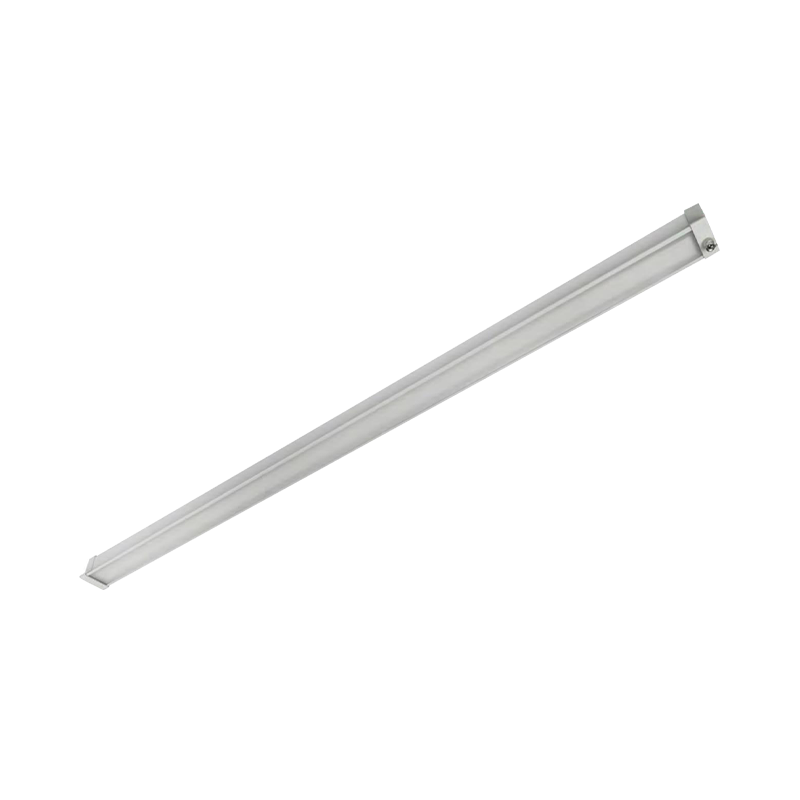
LG07O T8 Tube LED Tri-Proof Workshop LightT8 tube tri-proof fixture with single or double tubes, IP65 protection and optional PC or stainless-steel clips; tube format simplifies lamp replacement.View Product →The purchase price of a tri-proof light is typically a small share of what the installation costs over ten years. Maintenance access is the largest hidden line. A fixture with tool-free latches and a replaceable light source cuts each service visit by several minutes, and across hundreds of fittings in a plant that difference outweighs a few percent of unit cost.
Energy is the second line. Moving from a legacy fluorescent batten at around 60 lm/W system efficiency to a modern LED tri-proof fixture at 130 lm/W or above roughly halves the connected load for the same delivered light, and the saving compounds once occupancy or daylight control is added. Cleaning is the third. Smooth housings without external fins or exposed screws reduce the labour needed in hygiene zones, and fewer crevices mean fewer bacterial harbourage points during an audit.
Functionally they overlap heavily. Tri-proof is a manufacturer family name covering water, dust and corrosion protection; vapor tight is a North American trade description linked to wet-location evaluation. Two fixtures with the same IP rating and similar construction perform similarly, but the certification documents differ and that difference often decides whether an inspector accepts the installation.
IP66 is the working minimum for hose-down cleaning, and IP69K where high-pressure hot-water jets are used daily. IP65 is not enough for direct jet cleaning at close range, even though it survives rain and incidental splashing comfortably.
No. The IP code describes particle and water ingress only. Corrosion resistance depends on housing material, coating, fastener grade and gasket chemistry, and in North America it is expressed through NEMA 4X rather than through IP.
You can install one, but sanitation teams normally expect an NSF/ANSI 2 listing in high-care zones. Without that listing the fixture may be restricted to non-product areas, which often makes it impractical to standardise across a plant.
Because sealing stops water entering but does not stop the internal air from expanding and contracting. A pressure-equalisation vent with a hydrophobic membrane, combined with correct driver thermal design, is the usual remedy. Cold rooms and fixtures switched on and off daily are the most exposed.
Both are dust tight. IP65 is tested against a 6.3 mm nozzle at 12.5 L/min, IP66 against a stronger jet at higher pressure. In a plant the difference shows up when someone cleans the fitting from half a metre with a pressure washer rather than a hose.
Yes, or it must be enclosed in a sealed, thermally managed compartment that carries the same protection. An IP20 driver inside an IP66 shell is a common cause of early failure in wet areas.
Normalise four things: delivered lumens for the complete fixture at operating temperature, the IP and IK test reports naming the exact model, the driver brand and its temperature range, and the spares commitment. Once those four are aligned, the remaining differences are usually mechanical detail rather than performance.



No.8, Ankang West Road, strada Zonghan, Cixi City, provincia Zhejiang, P.R.China
0086-574-6320 0283
Copyright © Ningbo Longer Lighting Co., Ltd.
Toate drepturile rezervate.